How to Create Stylish Indoor and Outdoor Spaces in the Sun
The planning of both Indoor and Outdoor Spaces in the sun cannot be achieved by merely adding a patio or big glass doors. The desert climate is one that requires careful planning, considering the high amount of sun, dry heat, seasonal dust, and surprisingly pleasant evenings.
Well done, these spaces increase available living room, enhance comfort, and sustain the manner in which individuals live in the Southwest. No use having a beautiful outdoor area that is occupied for only a few months of the year. It is essential to plan in such a way that the desert is taken into account at the earliest stage.
Reasons why Indoor Outdoor Life Just Makes Sense
The climate of the sun supports the mindset of the homeowner to naturally consider the outside of the house. Outdoor spaces can be utilized as actual extensions of the house instead of patios used on an occasional basis, since many areas of the state have over 300 sunny days annually.
Nevertheless, the sunshine to be found in the outdoor living is also the cause of the real comfort challenges. The ability to design with the opportunity to the limitation in mind is what would make the difference between a usable space and a space that would be empty throughout the year.
The fact of living in the desert is also characterized by the extreme changes in temperatures during the day and night. Poorly designed outdoor spaces become unusable on a summer afternoon, but evenings are pleasant and pleasant enough. This is the aspect of flexibility that is so essential in Sun Homes. When spaces are wisely integrated inside and outside, the homeowners will be able to change their activities throughout the day rather than seclude themselves inside their houses on a month-by-month basis.
Plan Around the Desert Climate Since Day One
Climate-responsive planning is always the first step toward creating effective indoor-outdoor environments. Home orientation contributes significantly to comfort, particularly in knowing how to deal with the harsh Western sun. It is better to avoid fighting with the sun later, using costly fixes when it is possible to avoid the problem by making smart positioning at the beginning. The appropriate consideration of the prevailing breezes is also to be given early, which can become a significant passive cooling when utilized wisely.
Another major strategy that is not carefully examined is zoning. The various outdoor locations may be arranged in the morning to have coffee, afternoon shade, or evening parties, depending on the direction of the sun on the property. The layout should also be affected by monsoon winds, seasonal dust, and sudden weather changes. To mitigate these realities, early planning helps to minimize the long-term maintenance problems and enhance the year-round utilization.
Establish a flow between the indoor and outdoor spaces
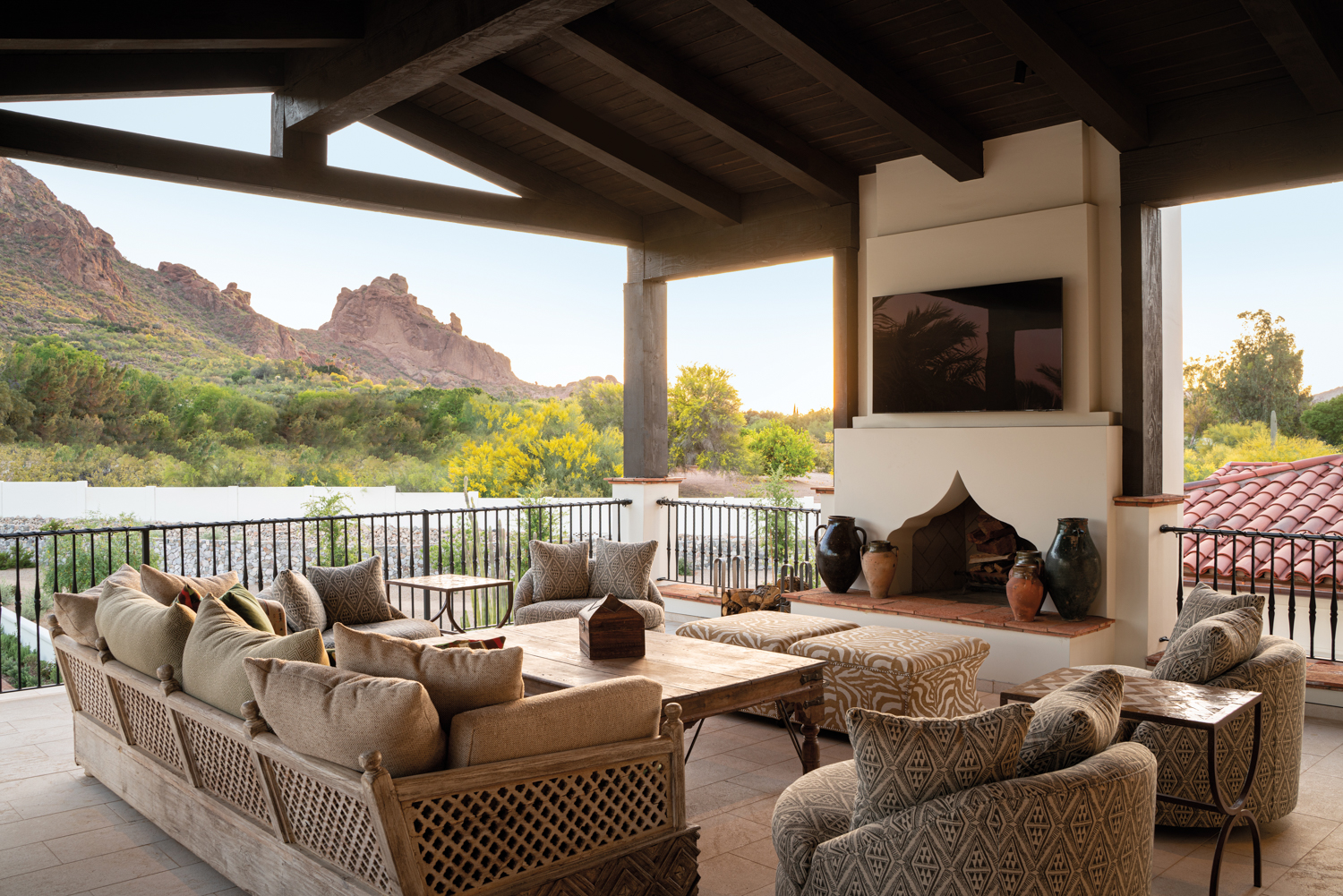
An indoor-outdoor home must not be separated into different spaces, but it should be a comfortable home that is visually and physically connected. The large sliding or multi-panel doors assist in removing the wall between spaces, and also the natural light penetrates deeper into the households. When floor heights and minimum thresholds line up, moving across spaces becomes instinctual. These details can be trivial when planning, but they have a significant effect in the day-to-day use.
The bonding of inside and outside is also enhanced by material continuity. Complementary flooring textures or other similar color palettes are used to make the outdoor space seem as much of an extension of the interior as possible. Sightlines are also a big thing, and when you look out and can view the patio, garden, or seating area, then the house will instantly seem bigger. Installation of kitchens and main living spaces close to the outside areas also promotes frequent use, and not occasional use.
Create a Shade That Will Realistically Save Sun
Shade is essential for outdoor comfort and is not an alternative. Fantastically designed patios may turn into useless documents in most seasons unless they are well covered by overhead. Covered patios and pergolas, as well as ramadas, are used to serve various purposes, but they are all effective only when they have been properly sized and oriented. The goal is to block the sun’s greatest rays during the warmest parts of the day, not just to give shade.
The stratified shade techniques work well in deserts. Deep roof overhangs can hide the peak summer sun, and vertical elements help manage low morning or evening glare. Have you ever been in some patios that are still hot even under shade? There are usually other surfaces that reflect heat instead of the sun. Shade can also be made retractable, giving the homeowner flexibility to open and close the coverage according to the alterations in seasons and temperatures.
Select Materials that will be able to operate under desert conditions
The choice of materials has a direct impact on the sun houses’ comfort, longevity, and upkeep. Certain surfaces are very absorbent and do not release the heat even after sunset, and this makes outdoor activities very uncomfortable even in the evening. Flooring materials like porcelain paving, natural stone, and well-finished concrete flooring are better in areas that are exposed to intense sunshine. Poor selection of materials may pose a challenge that may be hard and costly to address in the future.
Color, too, has a rather significant role to play in heat management. The lighter colors capture much more sunlight, making surfaces cooler to the feet. Dark colors can be dramatic, but at the same time, they tend to lead to the accumulation of heat in uncovered regions. Fabrics, finishes, and sealants should also be UV-resistant, as desert sun can easily damage lower-quality materials. Long-lasting and long-life options are generally the most economical in such a climate.
Make your outside areas comfortable and cool
The utilization of cooling strategies may also greatly prolong the frequency of outdoor space utilization in the sun. Ceiling fans installed in covered patios blow air over the skin, increasing perceived comfort even in hot interior temperatures. The design of the passive airflow is also important; openings and the layout should be positioned to promote natural breezes. When the environment can do some of the cooling for you, what good is it to cool everything mechanically?
Water features and misting systems can also be localized cooling systems, but should not be employed in dry climates. Unnecessary moisture in the inappropriate position can cause problems with the maintenance or decrease the comfort in the humid monsoon seasons. Landscaping may also serve a role in balancing the temperatures due to the radiant heat of the surrounding surfaces. Combining multiple cooling approaches gives the outdoor spaces almost an extended period of usage in a year.
Smart Landscaping to Support Outdoor Living
Landscaping in desert environments ought not to ensure that the surroundings look good, but it must play an active role in ensuring comfort. Native plants and drought-tolerant plants are particularly useful since they give shade without a significant effect on the consumption of water. The trees on the west and southwest sides of outdoor living areas can go a long way in preventing exposure to heat in the late afternoons. Layered planting is also useful to develop mini-climates that are perceivably colder.
Movements between the indoor and outdoor areas should be directed by pathways and the placement of plants that are natural. Privacy can also be maintained in strategic landscaping without causing spaces to be closed in. Have you thought of the amount of reflected heat of bare gravel or hardscape surfaces? A combination of softscape and hardscape strategies prevents the excessive amount of heat and makes the surroundings more comfortable. A good irrigation design will make the landscape sustainable in a water-conscious sun.
Design Outdoor Kitchens and Living Areas: Living Areas that Are in Use
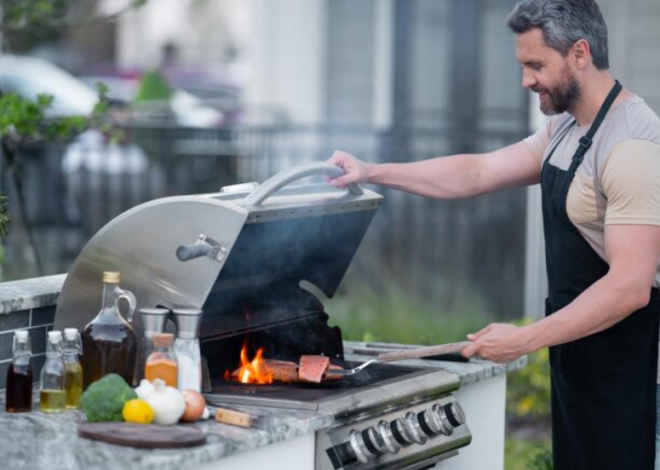
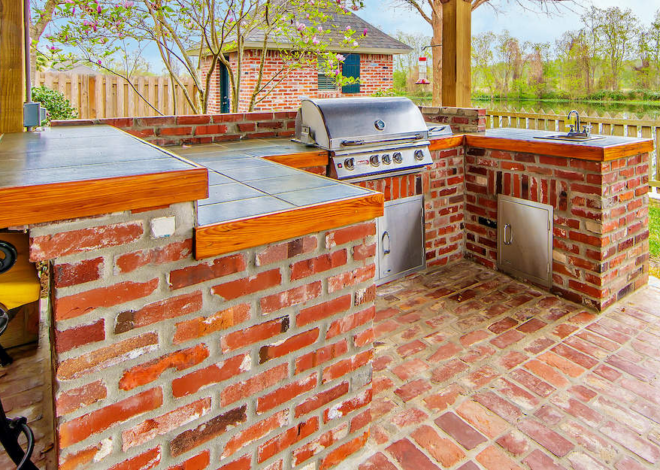
The most effective outdoor kitchens and seats are those that are created based on actual everyday routines. The fact that the indoor kitchen is closer assures that one does not have to travel a lot; hence, an increase in usage. This is the reason why the remodeling specialists of the kitchen usually suggest planning the interior and exterior cooking areas of the kitchen as one instead of being different projects.
Where the appliances are placed should also be based on the direction of winds and the amount of heat, so as to avoid discomfort during cooking. It is the wise choice of layout that can turn a showcase into a very practical area.
The climate in the sun is particularly harsh, and therefore, durability is essential. The materials used as countertops, cabinetry, and even seating should be able to resist high heat, the sun, and dust. The sitting places must provide daytime shades and evening meeting places. Adequate lighting will help ensure that the space is not an idle area that goes to waste once the sun goes down.
Dust, Heat, and Easy Maintenance Plan
The desert conditions in the sun mean that maintenance planning has to be realistic at the very start. Intrusion of dust is an inescapable thing, and only a careful design of entries and transition areas makes it possible to minimize the amount of dust entering the house. Even easy-to-clean surfaces can make homeowners maintain good-looking spaces without necessarily working hard on them. The long-term maintenance is also minimized by the use of materials that are resistant to fading and heat damage.
Another detail that is neglected is storage planning. During the dust storm or the extreme heat, outdoor cushions, accessories, and seasonal items require a sheltered area. What will be the purpose of creating a beautiful outdoor room when maintaining the room turns into an all-time task? Lasting finishes and easy cleaning schedules can be used to make sure that the space is not hectic and tedious. Designs should never be made without considering usability in the long run.
Conclusion
The secret of comfortable indoor outdoor living in sun is that it demands intelligent choices regarding the orientation, the shade, the material used, the cooling, and the durability in the long-term. Well-designed homes in the desert are not usually accidental; they are a result of meticulous design that places more emphasis on practicality and less on aesthetics.
Homeowners can achieve this by making their living environments welcoming throughout the year by building designs that are climate-responsive and emphasizing viable comfort solutions. And is not the result to create spaces that are utilised and appreciated by people all year round? Desert living can be as easy as it is habitable with the correct strategy.